
Leftover smoked BBQ is precious. Here's exactly how to reheat brisket, pulled pork, and wings without losing the moisture, bark, and flavor you paid good money for.
Leftover BBQ Is a Privilege
If you've ordered from us or been to one of our catering events, you know that leftover BBQ is not a consolation prize. It's a second opportunity. The smoke flavor has had time to integrate further overnight; the fats have solidified into a natural basting layer that re-melts beautifully during reheat. Done right, day-two BBQ can rival day-one.
Done wrong — microwaved on high for three minutes — it comes out dry, tough, and sad, a pale ghost of what it was. The microwave is a moisture assassin. It heats unevenly, concentrates certain spots to well above 212°F, and drives moisture out of the meat so fast it never has a chance to reabsorb.
Here's how to do it right.
Reheating Brisket
Brisket is the most moisture-sensitive protein to reheat. The flat (the lean muscle) has very little fat to protect it during the heating process, and it will dry out fast under direct, intense heat.
The best method: oven with added liquid. Preheat your oven to 275°F — lower than you might expect, but we want gentle, even heating, not a second cook. Place the sliced brisket (or whole brisket if you have it) in a baking dish. Add 1/4 cup of beef broth or, ideally, any pan juices you saved from the original cook. Cover tightly with foil. Heat until internal temperature reaches 165°F — about 25 to 35 minutes for sliced brisket, 45 to 60 minutes for a large chunk.
The foil traps the steam from the added liquid, which re-moistens the surface of the meat as it heats. The added beef broth supplements any juices that are being released. The result is a slice that's nearly indistinguishable from fresh.
The second-best method: sous vide reheat. If you have an immersion circulator, vacuum-seal the brisket with any accumulated juices and reheat in a 145°F water bath for 1 to 2 hours. This is essentially the same technique we use in our production process — precise temperature, no moisture loss, perfect texture. Pull it out and sear the exterior in a hot cast iron pan for 90 seconds per side to restore some surface texture. This method is exceptional.
For the bark: The bark will soften during any moist reheat method. To restore some texture, remove the foil for the last 5 minutes of oven reheating, or use the 90-second cast iron sear mentioned above. You won't get back to the full crunch of fresh-cooked bark, but you'll get something close.
What not to do: Microwave. Or place directly on a hot grill without wrapping. Both destroy moisture too quickly.
Reheating Pulled Pork
Pulled pork is more forgiving than brisket because the collagen-gelatin matrix in a well-cooked shoulder acts as a natural moisture-retention system. The gelatin surrounds and protects the individual muscle fibers, which means it takes more heat stress to drive moisture out.
Stovetop with liquid. Place the pulled pork in a heavy-bottomed pan or Dutch oven over medium-low heat. Add a splash of apple cider vinegar or broth — about 2 tablespoons per pound of pork. Cover and heat, stirring occasionally, until reaching 165°F throughout. The steam from the liquid keeps the pork moist; the acidity of the vinegar refreshes the flavor nicely.
Slow cooker. If you have time, put the pulled pork in the slow cooker on low with a splash of broth or your leftover sauce. Let it come up to temperature over 1 to 2 hours. This is the most hands-off approach and produces excellent results.
Oven method. Same as brisket — 275°F, covered with foil, with added liquid. Works well for larger quantities, such as when you're reheating for a subsequent gathering.
Reheating Wings
Wings are the trickiest reheat because you have two competing goals: hot, juicy interior and crispy skin. Moist methods that work for brisket and pulled pork will steam the wing skin and make it rubbery. Dry high-heat methods risk drying the interior.
Best method: air fryer or oven at high heat. If you have an air fryer, preheat to 375°F and cook the wings for 8 to 10 minutes, flipping once. The circulating air crisps the skin beautifully without drying the interior. If no air fryer, use the oven at 400°F on a wire rack over a baking sheet — 12 to 15 minutes.
Do not cover wings during reheating. Do not add liquid. The goal is dry heat that re-crisps the skin surface.
What to do after reheating wings: Toss in sauce immediately after pulling from the heat, while the skin is hot and receptive. The sauce will adhere far better than it would to cooled wings. This applies whether you're using hot sauce, honey glaze, or our recommended pairings.
General Rules That Apply to Everything
Never reheat from frozen without thawing first. Thaw in the refrigerator overnight. Frozen BBQ thrown into the oven heats unevenly — the exterior overcooks while the interior stays cold.
Save every drop of liquid. The juices in the bottom of the container after refrigerating BBQ are solid BBQ gold. They contain rendered fat, smoke compounds, and concentrated meat flavor. Use them as your added liquid during reheating. They are far better than commercial beef broth.
Temperature targets matter. USDA safe serving temperature for cooked meat is 165°F internal. A meat thermometer isn't just for original cooking — it's essential for reheating to ensure you're both safe and not overcooked.
Rest briefly before serving. Even reheated BBQ benefits from a 3 to 5 minute rest before plating. It allows the juices to redistribute slightly after the heating process.
Planning for Leftovers
If you're ordering from us at the North Port location or booking a catering event in Southwest Florida and you're expecting leftovers — which is a very reasonable expectation since we've never heard of a BBQ event where the food ran short — plan your storage proactively. Individual vacuum-sealed portions or zipper bags with all air pressed out, refrigerated within two hours of service, will keep in excellent condition for 4 days and reheat beautifully with the methods above.
Leftovers are part of the BBQ experience. Treat them well and they'll treat you right.
Arthur Gumirov
Founder & Pitmaster · BBQ Art Co.
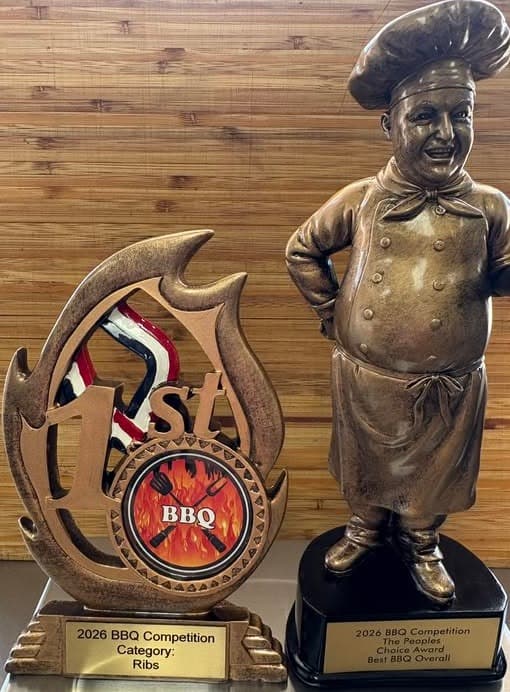
Known as “Art” at the truck, Arthur is the Lithuanian-born founder and pitmaster behind BBQ Art Co. He built the operation around a signature method — hardwood smoking finished sous vide — that earned Best BBQ Overall, People's Choice, 1st Place Ribs, and 1st Place Miscellaneous at the 2026 BBQ Competition. He personally oversees every cook and catering event across North Port, Venice, Sarasota, and the rest of Southwest Florida.
Meet the Pitmaster →Award-Winning BBQ, Catered to You
Hungry yet? Let’s feed your crew.
Weddings, corporate lunches, backyard parties — our smoked & sous-vide BBQ travels anywhere in Sarasota & Charlotte counties. Free quotes, fast replies.
Keep Reading

The Best BBQ Sauce Pairings for Brisket, Pulled Pork, and Wings
Sauce is a finishing note, not a cover-up. Here's how to match the right BBQ sauce to each protein — and when to skip sauce entirely and let the smoke speak.

Russian Coleslaw Recipe — The Side That Steals the Show
Forget watery, mayo-heavy coleslaw. Our Russian-style coleslaw uses a vinaigrette base, fresh dill, and shredded beets to produce a side that outshines everything else on the plate.

Cornbread That Actually Tastes Like Something: Our Recipe
Most BBQ cornbread is a delivery vehicle for butter. Ours has jalapeño, sharp cheddar, roasted corn, and a cast iron crust that makes it worth eating plain. Here's the recipe.